
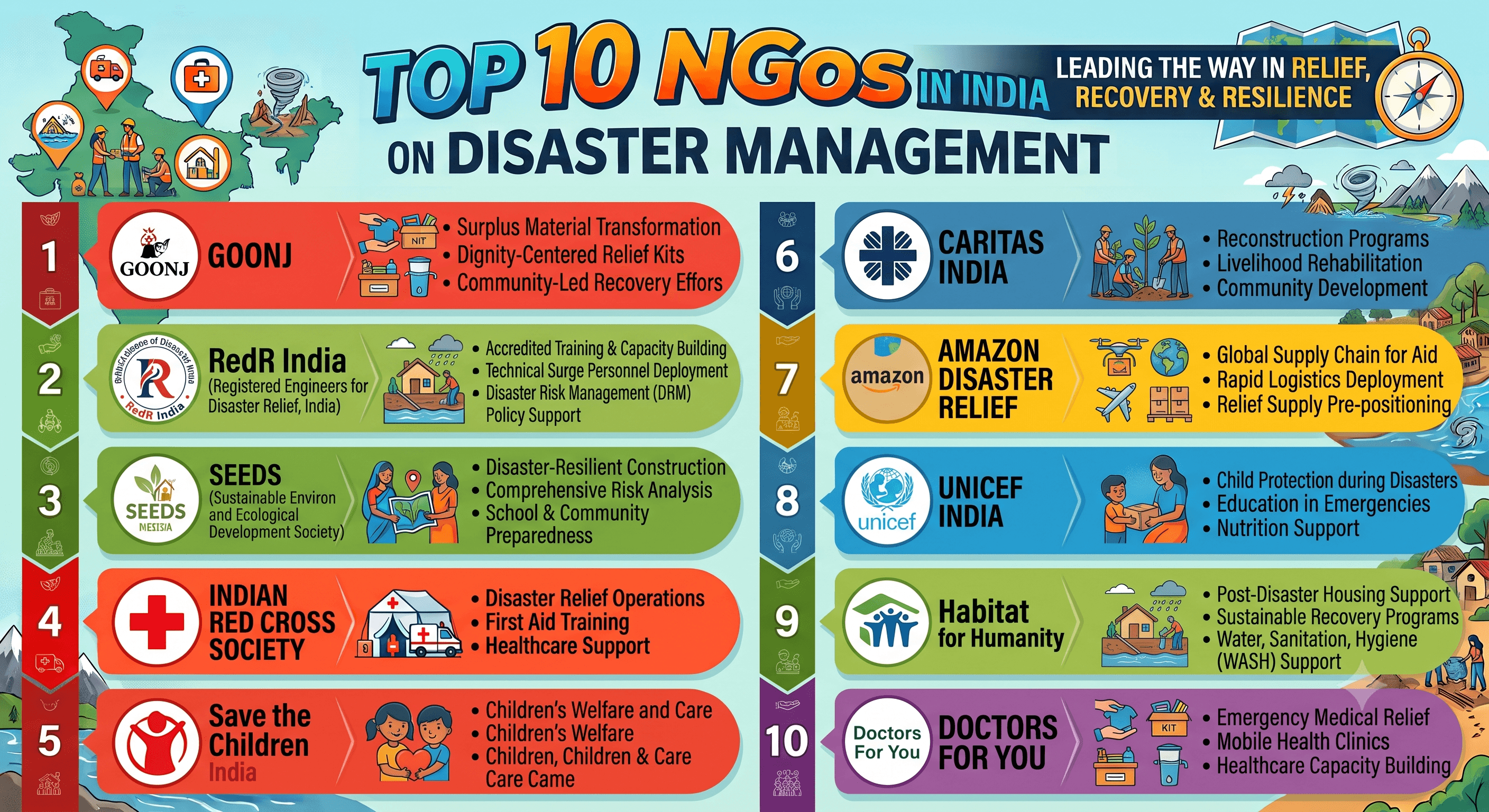
Top 10 Disaster Relief and Disaster Management NGOs in India: Strengthening Preparedness, Capacity Building, and Humanitarian Response
India's increasing exposure to natural and human-induced disasters has highlighted the critical role played by humanitarian organizations in supporting vulnerable communities before, during, and after emergencies. The following list has the Top 10 disaster relief NGOs working in India.
1. Goonj: Goonj is one of India's most recognized humanitarian organizations, known for transforming urban surplus materials into valuable resources for disaster-affected communities. During emergencies, the organization provides clothing, food, hygiene kits, and other essential supplies while actively involving local communities in recovery and rebuilding efforts. Its dignity-centered approach ensures that relief interventions go beyond charity and empower affected populations to participate in their own recovery process.
2. RedR India: RedR India is a leading humanitarian organization working to strengthen disaster preparedness, disaster risk reduction, emergency response, and community resilience across India. As part of the global RedR network, the organization collaborates with governments, civil society organizations, schools, and communities to build capacities for effective disaster management. Through initiatives such as school safety programmes, humanitarian training, urban disaster risk reduction, and community-based resilience projects, RedR India helps vulnerable populations better prepare for, respond to, and recover from disasters. Its focus on capacity building and preparedness contributes significantly to creating safer and more resilient communities. RedR India goes beyond emergency relief by strengthening the skills, systems, and capacities needed to reduce disaster risks before they occur. Through its work in preparedness, training, and resilience building, the organization helps communities and institutions become better equipped to face future disasters and recover more effectively.
3. SEEDS (Sustainable Environment and Ecological Development Society)
SEEDS has been at the forefront of disaster response, rehabilitation, and resilient infrastructure development in India. The organization works closely with disaster-affected communities to rebuild homes, restore livelihoods, and promote safer construction practices. Its emphasis on preparedness and risk-informed development has helped strengthen community resilience in some of the country's most disaster-prone regions.
4. Indian Red Cross Society: The Indian Red Cross Society plays a vital role in emergency response and humanitarian assistance across the country. With an extensive volunteer network and nationwide presence, the organization provides medical aid, shelter support, blood services, and relief materials during disasters. Its ability to mobilize quickly and reach affected populations makes it one of India's most trusted humanitarian organizations.
5. Save the Children India: Save the Children India focuses on protecting children during disasters and emergencies. The organization ensures access to healthcare, nutrition, education, child protection services, and psychosocial support for children affected by crises. Its interventions help reduce the long-term impact of disasters on children's development and well-being.
Caritas India: As a leading humanitarian organization, it adopts a comprehensive, community-first approach to disaster management that spans the entire disaster cycle. Its disaster-related work includes swift emergency responses to crises like cyclones and landslides, delivering essential supplies and psychosocial first aid . Crucially, the organization prioritizes long-term rehabilitation and resilience building by updating Village Disaster Management Plans, training local task forces in rescue and basic life support, and integrating disaster risk reduction into schools and communities to ensure local ownership and sustained preparedness against future hazards
7. Amazon Disaster Relief: Amazon Disaster Relief is the humanitarian logistics arm of the company, leveraging its massive supply chain infrastructure to deliver critical resources during emergencies. It operates through a network of global fulfillment centers and a fleet of aircraft, strategically pre-positioning essential supplies like hygiene kits and blankets to ensure rapid deployment to areas struck by natural disasters or crises[citation:1]. The program goes beyond just shipping goods; it collaborates with non-profits and relief organizations to provide technical support and logistical expertise, focusing on streamlining the distribution process to get aid to affected communities as quickly and efficiently as possible.
8. UNICEF India: UNICEF India delivers child-centered disaster response across the full emergency cycle, providing safe water, healthcare, hygiene supplies, and Child-Friendly Spaces for learning and psychosocial support during crises like floods and cyclones. Critically, it embeds disaster risk reduction into systemic frameworks—partnering with the National Disaster Management Authority, training frontline workers, and implementing resilience programs like Saksham Shala to make over 53,000 schools climate-resilient—ensuring children's unique vulnerabilities are addressed while building long-term preparedness across health, education, and protection sectors nationwide.
9. Habitat for Humanity India: Habitat for Humanity India focuses on post-disaster rehabilitation by helping affected families rebuild safe and resilient homes. The organization combines housing support with disaster preparedness training and community awareness initiatives, enabling communities to recover more effectively while reducing future risks.
10. Doctors For You: Doctors For You is a humanitarian organization dedicated to providing healthcare services during disasters, emergencies, and public health crises. Through mobile medical units, health camps, and emergency response teams, the organization ensures that affected populations continue to receive essential medical care when access to healthcare is disrupted.
These organizations collectively play a critical role in strengthening India's disaster management ecosystem. Through a combination of emergency response, rehabilitation, preparedness, capacity building, and resilience-focused interventions, they help protect lives, restore livelihoods, and build safer communities capable of withstanding future disasters.